I was born and raised in Miami, but pretty much everyone in my family is from Brazil, and there are certain names you grow up hearing said in a different tone than any other name gets. Pelé was one of them. Not "the soccer player." Just Pelé — said the way you'd say the name of someone who somehow belonged to everybody in the room at once.
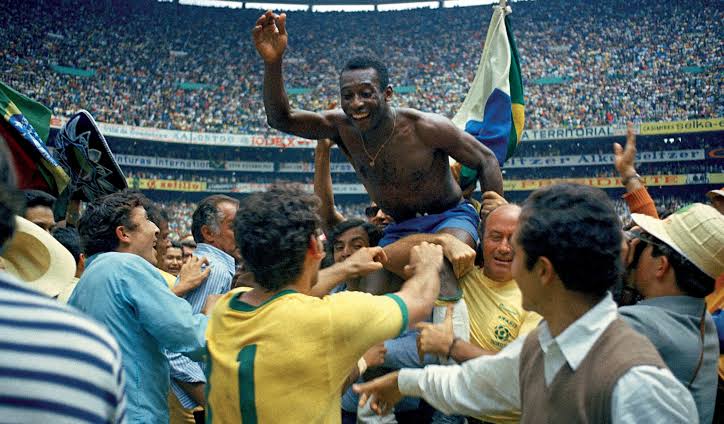
1970 — the celebration everyone in my family still talks about.
By the time Brazil won the 1970 World Cup in Mexico, Pelé was already on his third title with the national team, which is a genuinely ridiculous thing for one guy to be part of. That win let Brazil keep the Jules Rimet trophy for good, and that team is still talked about as one of the most beautiful sides to ever play — total commitment to attacking, flair over caution, joy as a style of play instead of just something that happens after you win. Pelé was the center of it, the one thing casual fans and serious tacticians could agree on at the exact same time.
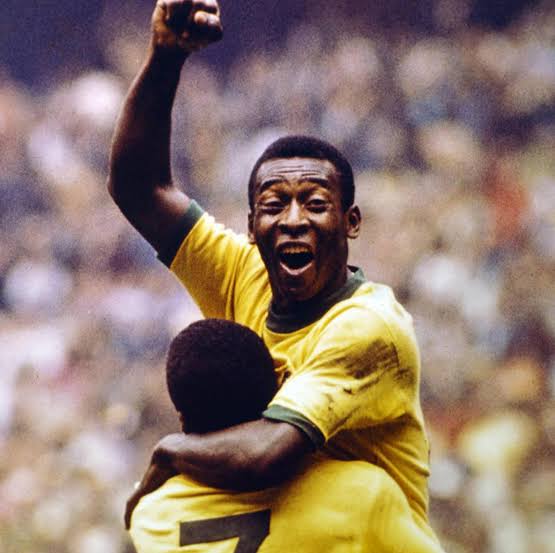
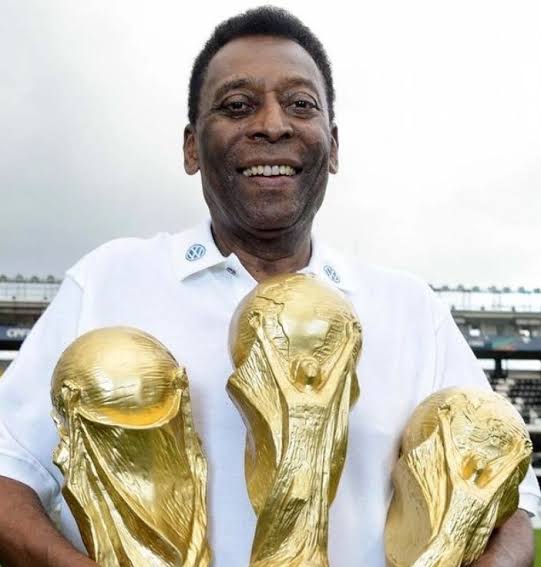
Later in life, still holding the proof.
A complicated kind of unity
What makes that moment more than a highlight reel, though, is the country it happened in. Brazil in 1970 was several years into a military dictatorship — real censorship, real repression, touching everything from newsrooms to universities. And in the middle of all that, here was a Black man from a poor background in Minas Gerais, becoming the single most beloved figure in the entire country, the one thing practically everyone could point to and feel proud of at the same moment, regardless of where they stood politically.
That's a strange kind of power to hold, and people still argue about what Pelé did with it. The regime was more than happy to wrap itself in the good feeling of that World Cup win, the way governments always do with a beloved champion. He's been criticized over the years for not using his platform to speak out against the dictatorship the way some other public figures did. I think both things can be true at once — that the criticism is fair, and that what he gave people on the field was still real. For ninety minutes at a time, a country that agreed on almost nothing could agree that what they were watching was beautiful. That's not everything. But it's not nothing either.
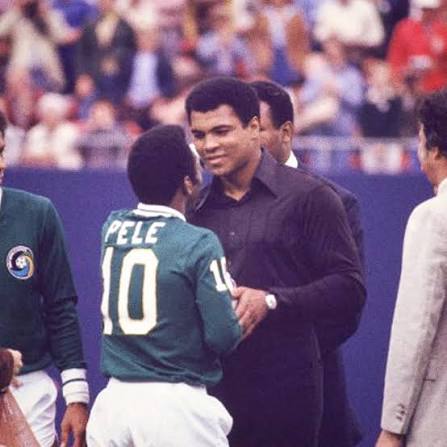
Two of the most recognized athletes on earth, in the same frame.
I think about that tension a lot, actually, in a totally different context — advertising. A campaign, a jersey, a walk-out song can unite people around a feeling without fixing a single real problem sitting underneath it. That doesn't make the feeling fake. It just means you have to be honest about what a moment like that can and can't do. Pelé gave Brazil the "can" part for decades. The "can't" part was never really his to fix by himself.
What got passed down to me
Pelé died in December 2022, and I remember how it landed in my house — less like news about a stranger, more like family news. My relatives who lived through the years he played talked about him like he'd personally handed them something, and honestly, in a way he had: a reason to believe their country was capable of greatness even while plenty else was going wrong around them. That got passed down to me the way family stories usually do, secondhand but still somehow vivid, and it's a big part of why I can't watch a soccer match, hear a Brazilian song, or lace up a pair of cleats without feeling plugged into something bigger than the game in front of me. I never saw him play live. I still feel like I did.
Carried off the field — the image my family always comes back to.
Further reading: The Athletic, on how Brazil won the 1970 World Cup.