There's a specific image from Brazil's 1994 World Cup run I keep coming back to, one I didn't even see live — I've just watched the clips enough times that it feels like my own memory now. Before matches, the players would walk out holding hands, a full line of them connected before a ball was even touched. It's such a small gesture, and I think that's exactly why it works. Nobody was performing courage. They were just showing, physically, that whatever happened over the next ninety minutes, they'd face it as one unit, not eleven guys who happened to share a jersey. That team won the whole tournament. I don't think the hand-holding won it for them. I think it's evidence of the kind of team that does.
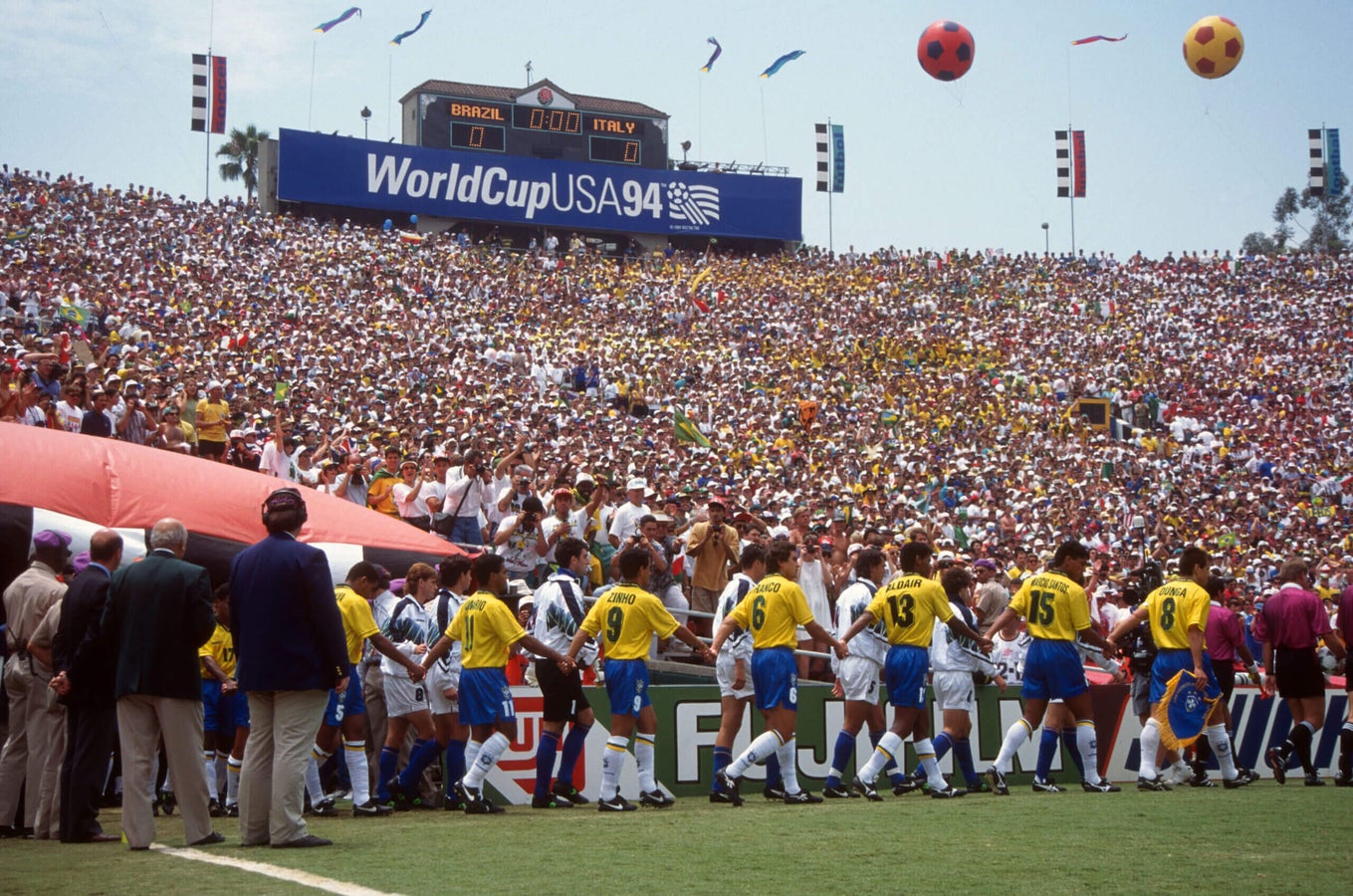
1994 — the walkout before the match, not the match itself.
A miracle that needed an underdog
Rewind fourteen years and switch sports entirely, and you get a moment I also didn't live through but grew up hearing about constantly, being American: the 1980 U.S. Olympic hockey team beating the Soviet Union at Lake Placid. That Soviet team was basically a machine — professional in everything but name, dominant for years, the kind of opponent a roster of American college kids thrown together a few months earlier had no business competing with. The U.S. wasn't just an underdog in that game. By any reasonable measure they weren't supposed to be competitive at all.
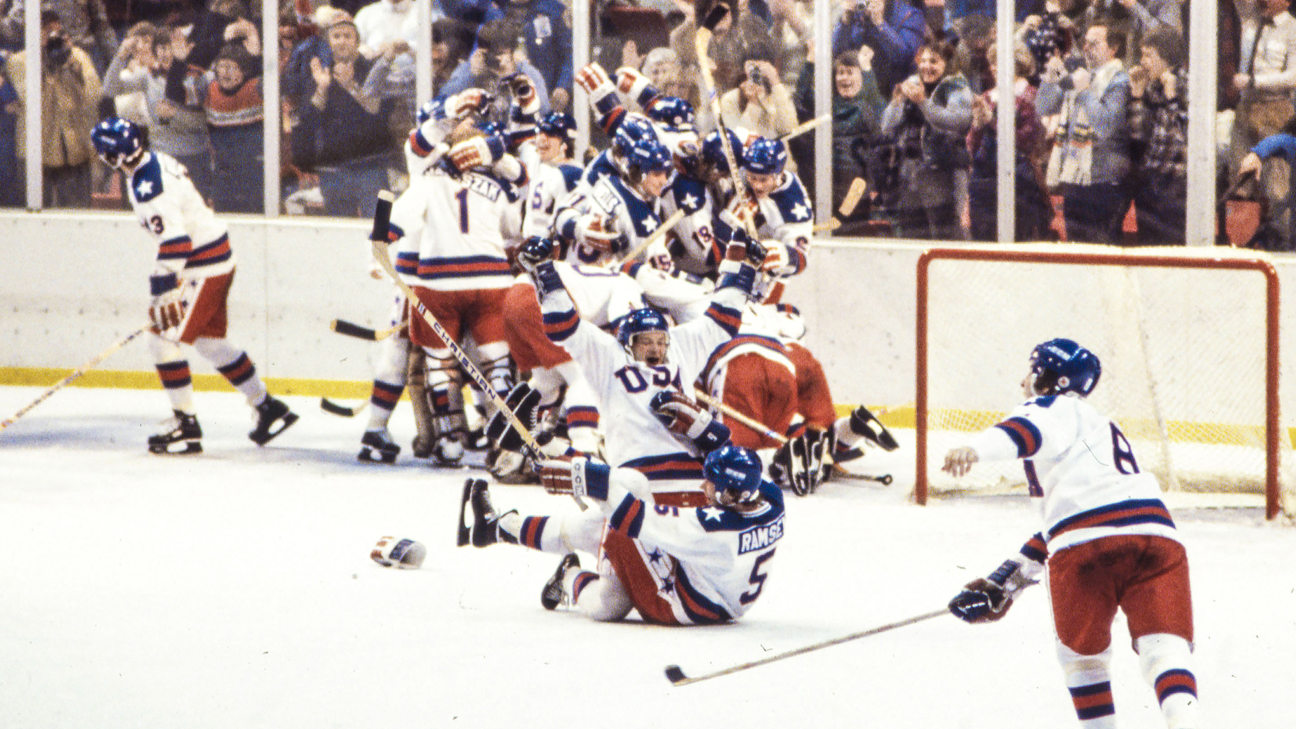
Lake Placid, 1980. The pile-up says more than any highlight package could.
What makes it "the Miracle on Ice" instead of just an upset is the context around it. The country needed a win like that at that exact moment — something to rally behind that had nothing to do with politics or the economy, just twenty guys deciding together they weren't going to lose. That's brotherhood under a different name: a group deciding, together, that the story everyone expects isn't the one that's actually going to happen. It's one of the moments in American sports I think about most, because it proves a whole country can borrow a little belief from twenty-two people on a sheet of ice.
When a city needed its team more than the trophy
The last one isn't really about a game at all, at least not at first. In April 2013, two bombs went off near the finish line of the Boston Marathon, and the city was shaken in a way that doesn't heal on a normal timeline. Later that same year, the Red Sox won the World Series, and the connection between those two things got bigger than baseball almost immediately. The team wore "Boston Strong" patches. Players spoke directly to the city, not just to fans. When they brought the trophy home, it wasn't really framed as a sports story anymore — it was framed as a city getting something back that had been taken from it.
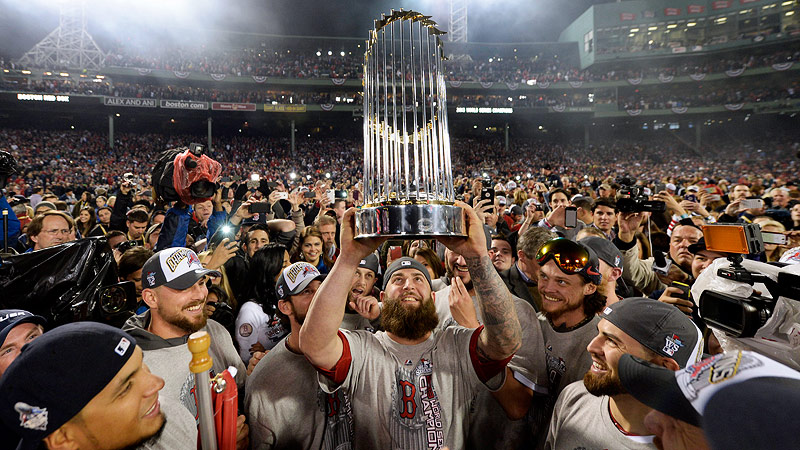
Fenway, 2013. Not just a championship for that city.
I think that's the clearest version of the same idea running through all three of these. A locked line of hands before kickoff. A hockey team nobody was supposed to beat, beating them anyway, at the exact moment the country needed the story most. A baseball team turning a championship into something closer to a public act of healing. None of it was really about the final score. It was about a group deciding, out loud or silently, to carry something together instead of alone.
I don't think you can manufacture that on purpose, no matter how good the marketing is. You can only set the conditions for it — a team that actually trusts each other, a city ready to rally around something, a story true enough to hold the weight everyone puts on it. That's probably as close to a thesis as I've got on brotherhood: the hand-holding and the patch on the jersey aren't what do the work. Those are just the visible parts of something that was already there.