Most stuff is supposed to look best the day you get it. A car's worth the most the second it leaves the lot. White sneakers peak for about a week before the first scuff shows up and you start babying them like they're already ruined. Somewhere in high school I found the one thing in my closet that broke that rule completely, and I've worn it almost every day since — a pair of Birkenstocks that should, by any normal logic, look worse now than the day I bought them. They don't. They just look like mine.
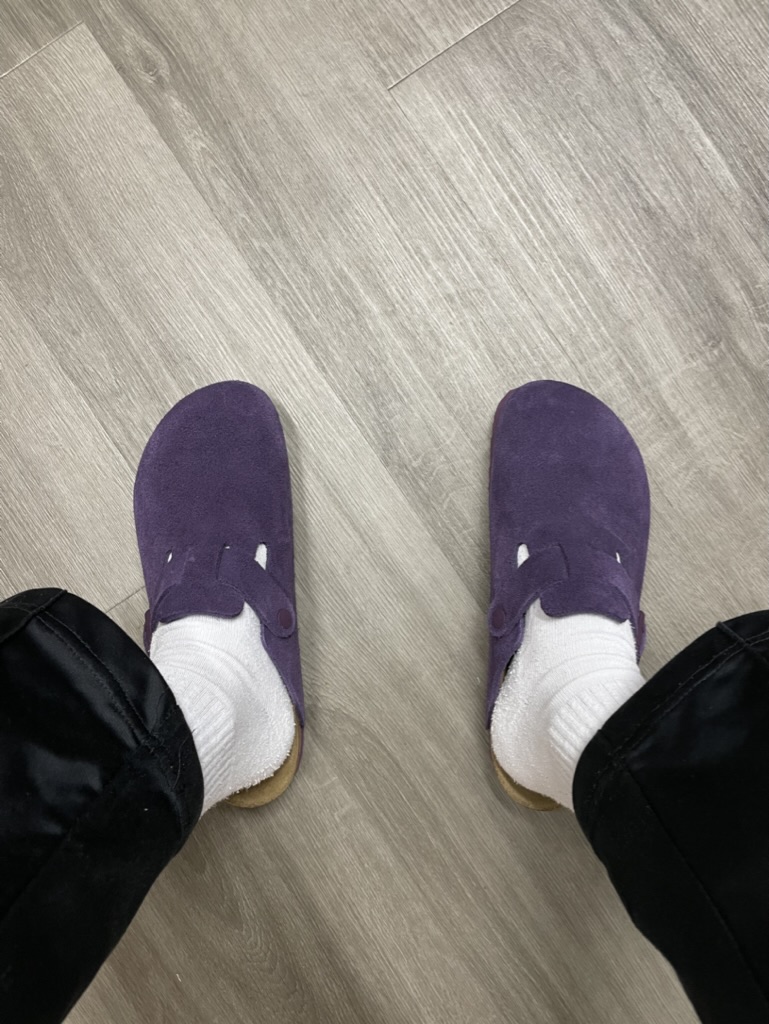
A newer pair, still breaking in.
I didn't fully get it back then, but there's something almost backwards about how a good pair works. The cork footbed is supposed to change shape around your foot instead of the other way around, which is basically the opposite of what every other shoe demands from you. Wear them long enough and they stop being a product and start being closer to a cast of your own feet — every crease, every darkened patch on the strap, is basically a diary entry nobody asked you to keep. That's not a flaw. That's the whole point.
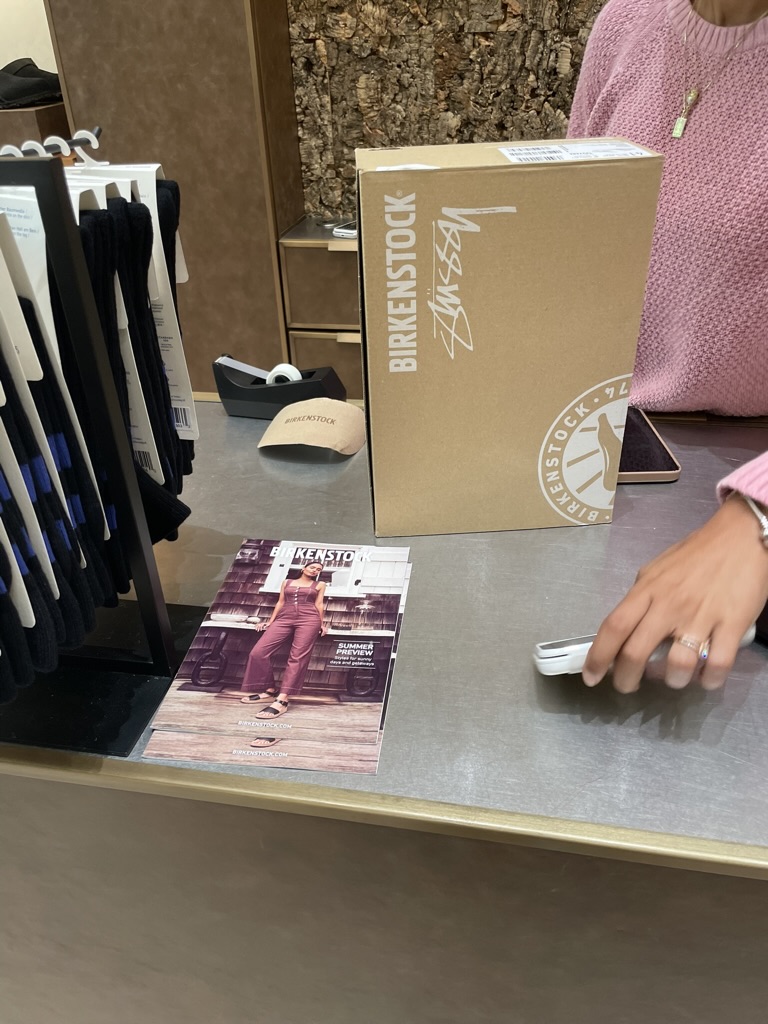
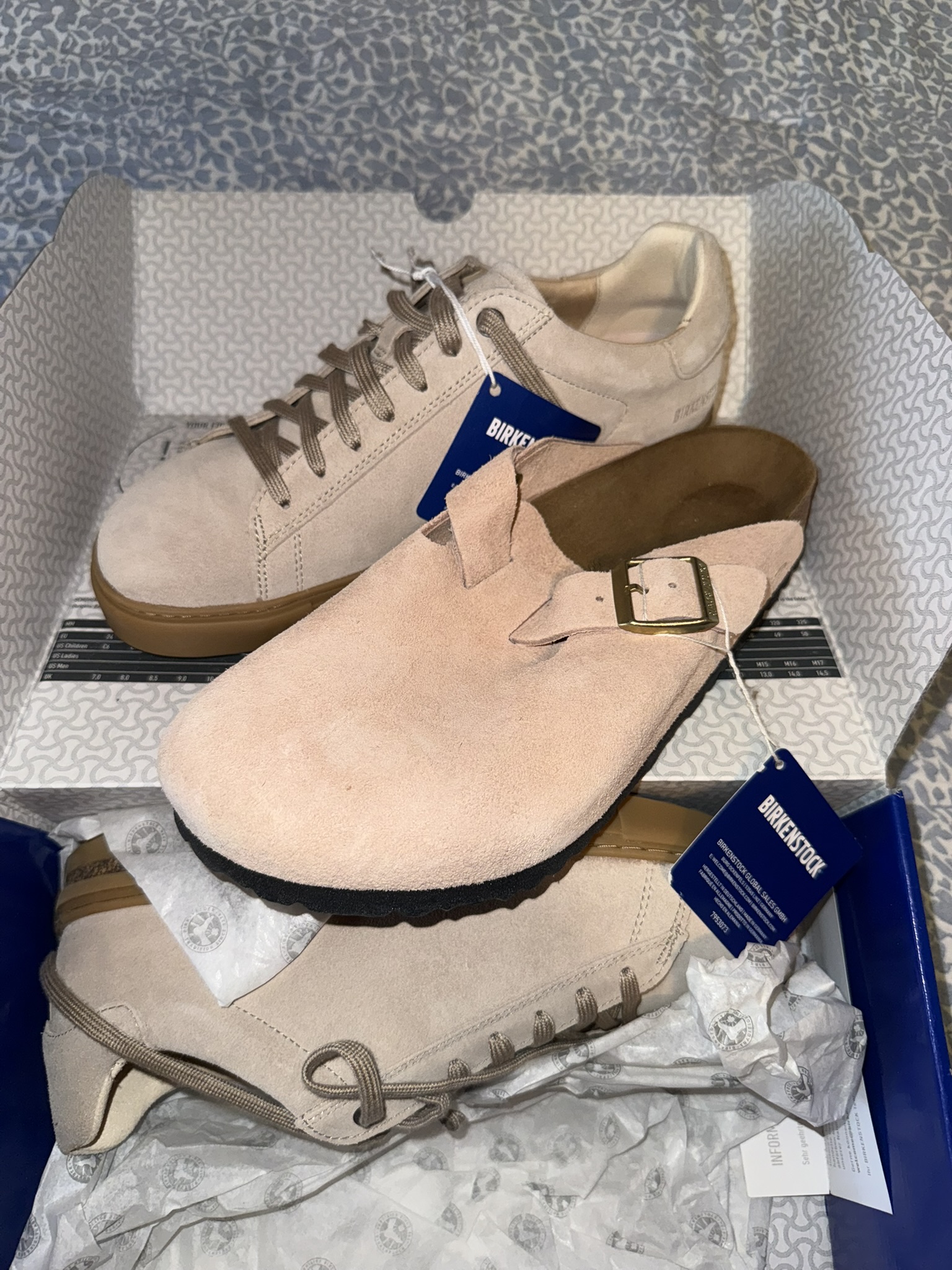
Picking up a new pair — a small ritual at this point.
I've worn mine through years that looked completely different from each other — classes, jobs, a summer in New York working around some of the most pristine, mint-condition objects in the world. There's an irony in that I think about a lot. I spent a whole summer around collectibles worth a fortune specifically because they'd been kept perfect, while the thing I actually reach for every day is worth more to me because it's the opposite of that. Sotheby's teaches you condition is everything — a scuff can cost real money at auction. My Birkenstocks taught me the opposite lesson first, and I still believe it more: sometimes the wear is the value.
A generation's shoe, whether it planned to be or not
I don't think it's an accident these became such a defining shoe for people around my age. They showed up right as a lot of us got tired of stuff engineered to fall apart on a schedule — phones that slow down right when the new model drops, sneakers that fall apart by the second summer. A shoe built by a company with generations behind it, made to last and actually get better with time, felt like it was arguing with everything else in the room. Didn't hurt that they're genuinely comfortable in a way most "cool" shoes don't even try to be.
But honestly, for me it was never really about the trend. It's that I can look down at my feet and see high school, see the first day of an internship, see a hundred ordinary Tuesdays that didn't feel important while they were happening. You can't manufacture that or fast-track it. You can't buy a broken-in pair and have it mean what mine means to me, same way you can't buy someone else's memories. The wear only means something because I was actually there for all of it.
I still buy new pairs when the old ones finally give out — cork doesn't last forever, unfortunately. And I always feel a little weird in a brand-new pair for the first few weeks, like I'm wearing someone else's shoes. Takes time to make them mine again. I think that's true of most things worth having, honestly — the good version doesn't show up finished. You have to put the miles in yourself.
Further reading: Birkenstock's company history.